


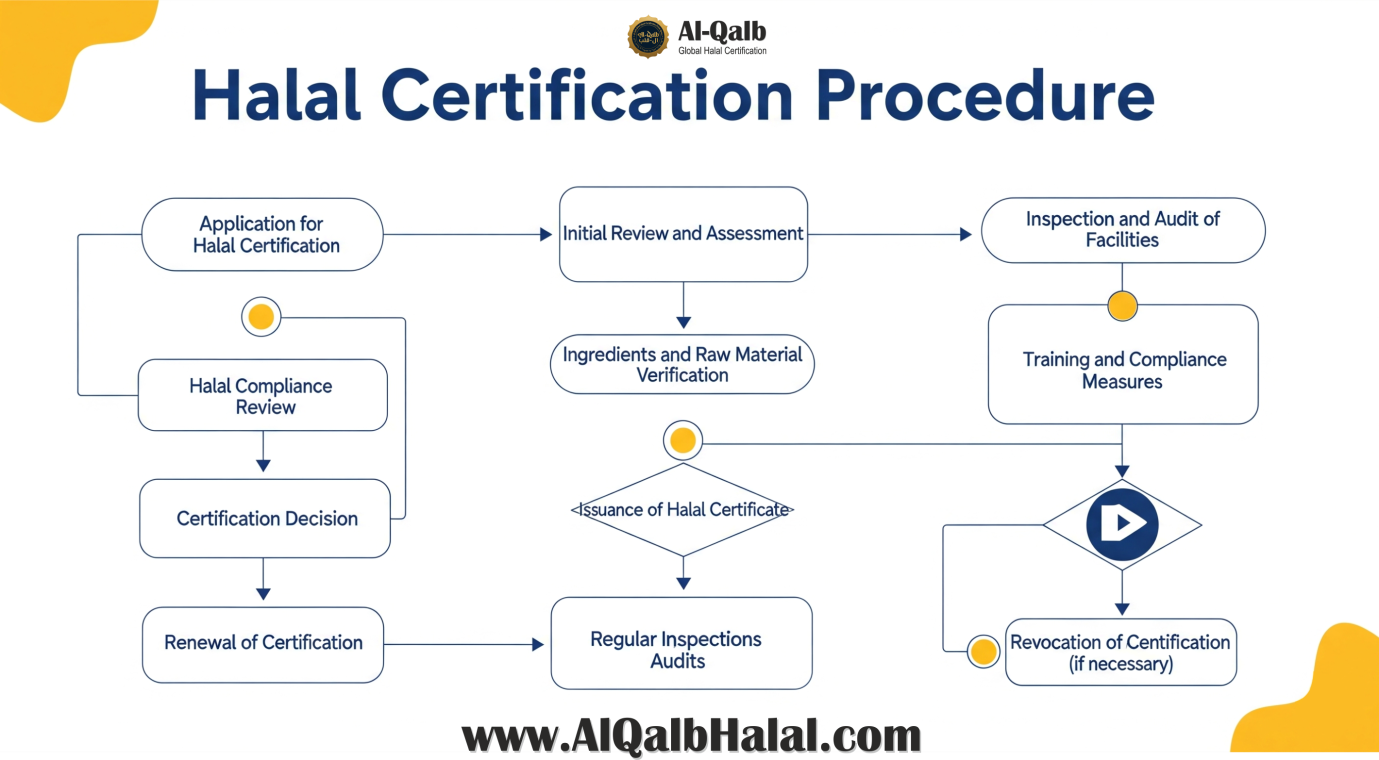
The Halal certification procedure is a comprehensive process that ensures a product or service complies with Islamic dietary laws and principles. This procedure is generally carried out by a recognized Halal certification body or agency. Below is an outline of the typical steps involved:
1. Application for Halal Certification
The process begins when a company submits an application to a recognized Halal certification body. This includes product details, ingredients, production processes, and relevant documentation.
2. Initial Review and Assessment , and others as well
The certification body assesses whether the applicant meets the basic requirements, reviewing ingredients and production methods for Halal compliance.
3. Inspection and Audit of Facilities , and others as well
- Review of hygiene and cleanliness standards.
- Checks for cross-contamination with non-Halal substances.
- Equipment verification to ensure Halal compliance.
- Inspection of slaughtering or production methods.
4. Ingredients and Raw Material Verification
- No haram (forbidden) substances like pork or alcohol.
- Suppliers must provide Halal certificates.
- Additives and flavorings must be Halal-certified.
5. Halal Compliance Review
- Proper storage and transportation to avoid contamination.
- Clear separation of Halal and non-Halal goods.
- Appropriate labeling with Halal identification.
- Audit of third-party handlers, if applicable.
6. Training and Compliance Measures
Employee training is provided on Halal procedures, hygiene, and awareness to maintain Halal integrity.
7. Certification Decision
If all requirements are met, the organization is granted a Halal certificate for the specified product or facility.
8. Issuance of Halal Certificate
The certified business receives an official certificate and may use the Halal logo on its packaging.
9. Regular Inspections and Audits
Annual or unannounced inspections are carried out to maintain certification validity and ensure continued compliance.
10. Renewal of Certification
Certification is valid for one year. Renewal requires re-evaluation and updates on any changes to the product or process.
11. Revocation of Certification (if necessary)
If a company fails to maintain compliance, the certificate may be revoked until corrective action is taken.